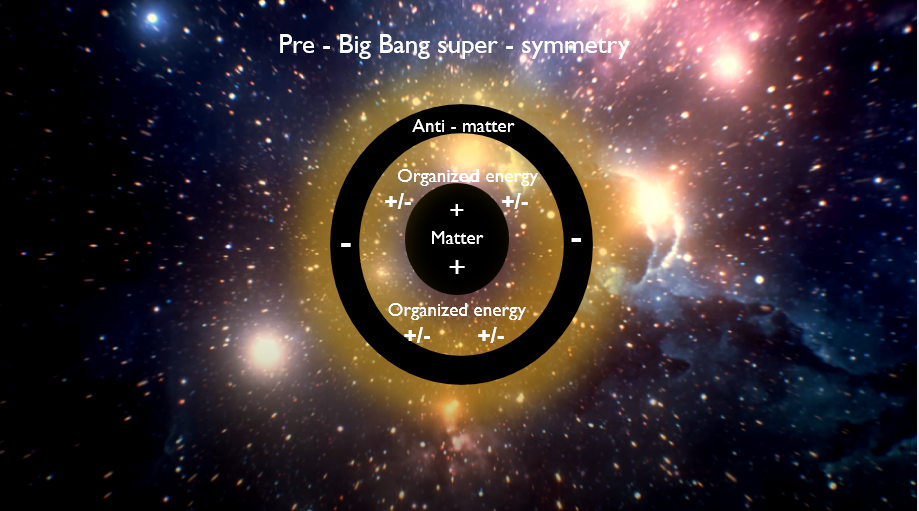
The organized energy field acts unseen as a morphogenetic field of formation through resonance and virtual database of biology. In biology, organization refers to the hierarchical structure of living organisms, from the simplest components to the most complex. This hierarchy provides a framework for understanding how living things are built and how they function.
Emergence: at each level of biological organization, new properties and functions emerge that are not present or relevant at the lower levels. This is known as the principle of emergence.
Self-organization: living systems are capable of self-organization, meaning they can construct, repair, transform, and maintain their parts and themselves using energy and matter from their environment.
Cells and the energy field : each cell doesn’t just function chemically; it’s guided by an underlying informational structure – the organised energy field. The spirit/memory cocoon provides a blueprint that keeps the cell’s processes coherent and maintains the “memory” of its function even as cells renew. This could explain why biological order persists despite constant molecular turnover.
Tissues : when similar cells work together, the organised energy field links their individual “information patterns” into a shared field. This allows tissues to synchronise their activity beyond just chemical signalling – a kind of non-local coordination.
Organs : organs integrate different tissues into a higher-level pattern. The organised energy field acts as a stabilising matrix, ensuring that complex interactions (nerves, blood flow, muscle contraction) remain harmonised.
Organism : at the whole-organism level, the energy field serves as the “cocoon of identity”. It carries the non-local memory that keeps the organism’s structure and behaviour consistent through time, even as cells die and regenerate.
This field could also be what ties physical biology to consciousness, allowing subjective experience to emerge from matter.This chapter discusses the evolution of life from simple one-cell organisms to the complex diversity of plants and animals, including humans. It emphasizes the immense timescale of evolution, highlighting the complexity and resilience of natural forms of life.
While some people believe that the intricacy of life must be attributed to a divine creator, the chapter explores how evolution works through mutations and natural selection, where beneficial mutations are passed down.
The chapter also focuses on the interdependence of species in nature, such as food chains that regulate the health and balance of ecosystems. Cooperation between species, both on a micro and macro level, contributes to the sustainability of habitats, with factors like water, temperature, and nutrient balance playing critical roles.
It argues that the complexity of ecological systems cannot be solely explained by genetic evolution and mutation but also involves ecological cooperation and spiritual influences. Human actions, which often prioritize personal gain over ecological balance, can disrupt this delicate system.
Ultimately, the chapter suggests that nature’s harmony and evolution are too sophisticated to be solely the result of random mutations, proposing that both spiritual and material memories work together to sustain life.

This chapter refers to the evolution of one-cell organisms into human forms of life and the large variety and diversity of plants and animals in nature. The ecological relations between animals and plants are wonderfully ingenious and extremely complex both at micro and macro level.
The timescale of evolution is enormous, particularly the period leading up to the arrival of organically structured forms of life. Compared to this pace, the speed by which nature has evolved during the last millions of years is fast.
The process of increasing complexity and resilience of natural forms of life demonstrate that evolution is speeding up. Large groups of people that consider the currently existing, complex forms of life, perceive them to be so complex, resilient and balanced that they can only attribute their creation to God.
The path that led amino acids and unicellular organisms to evolve into the wonderfully large diversity of creatures we know today does not sound feasible to them. The scriptures of their religion speak of a creator or God, who lends an omniscient basis to life in all its appearances. Mutations of genetic material are highly coincidental. Large parts of them do not have any lasting effect: they are useless or provide too little advantages or disadvantages.

Mutations are successful when they are singled out by natural selection or competition from enemies or congeners. When a mutation delivers a substantial advantage, its carriers will become hereditary dominant. The evolution of each species is an effort in itself, a process that should be admired. We are subjected to an even bigger admiration when we consider the cooperative relations between species that serve their survival and procreation.
An example is food chains, that regulate both the quality and quantity of a species so it does not become dominant, but stays healthy and strong – except for man. The weaker species are destroyed first. The waste from their destroyed organisms serves as a source of life for other species. Enemies are fought or resisted by rejection or enticement.

Species cooperating at micro level affect the living climate and habitat at macro level. This process eventually results in a habitat with sufficient water, sun, shade and nutrients, the right temperature and protection from radiation. There must be the right concentration of oxygen and carbon to create organically structured material and information carriers that ensure the genetic material is reproduced, thus providing nature with a genetic memory in order for predictable procreation to happen.

The enormous knot of micro and macro genetic relations is too awesome to be attributed to genetic evolution only. There can only be ecological cooperation at micro and macro level if life cycles and physical constants are harmoniously balanced. Nature is harsh in its dire consequences of eat or be eaten. But everything has a function and value to a species’ future existence. The interest of an individual member of the species is subordinate to the general interest of a balanced habitat that will sustain the species as a whole.
A food chain pyramid and mutually beneficial cooperation develop: a web of feedback mechanisms to sustain a natural balance. The behaviour of individual members of a species may seem hard and illogical, but everything fulfils a function in the larger context of ecological balance. It is a subtle balance that can easily be disturbed by inexpert and, particularly, human behaviour.

Human behaviour is far too much aimed at satisfying their own pleasure and needs. Man overcrops and manipulates nature to their own benefit. Man maximises their own profits and even destroys nature or puts so much pressure on it that its resilience is affected and it cannot survive in the long term. Despite its apparent ruthlessness, the harmony of nature in all its appearances is so sophisticated it cannot have been created by genetic variation and mutation alone.

As a cocoon of all matter, the organised energy field creates memory and structure of matter that surpasses its hereditary and genetic components. The spiritual and material memory components add to each other. DNA carries memory at micro material level. The organised energy field carries memory at micro and macro level as an omnipresent intermediary between the physical and metaphysical world. The evolution of nature at macro level is too sophisticated and complex to be attributed only to coincidental mutations that happen exactly in the right place at the right time to protect the progress of evolution.